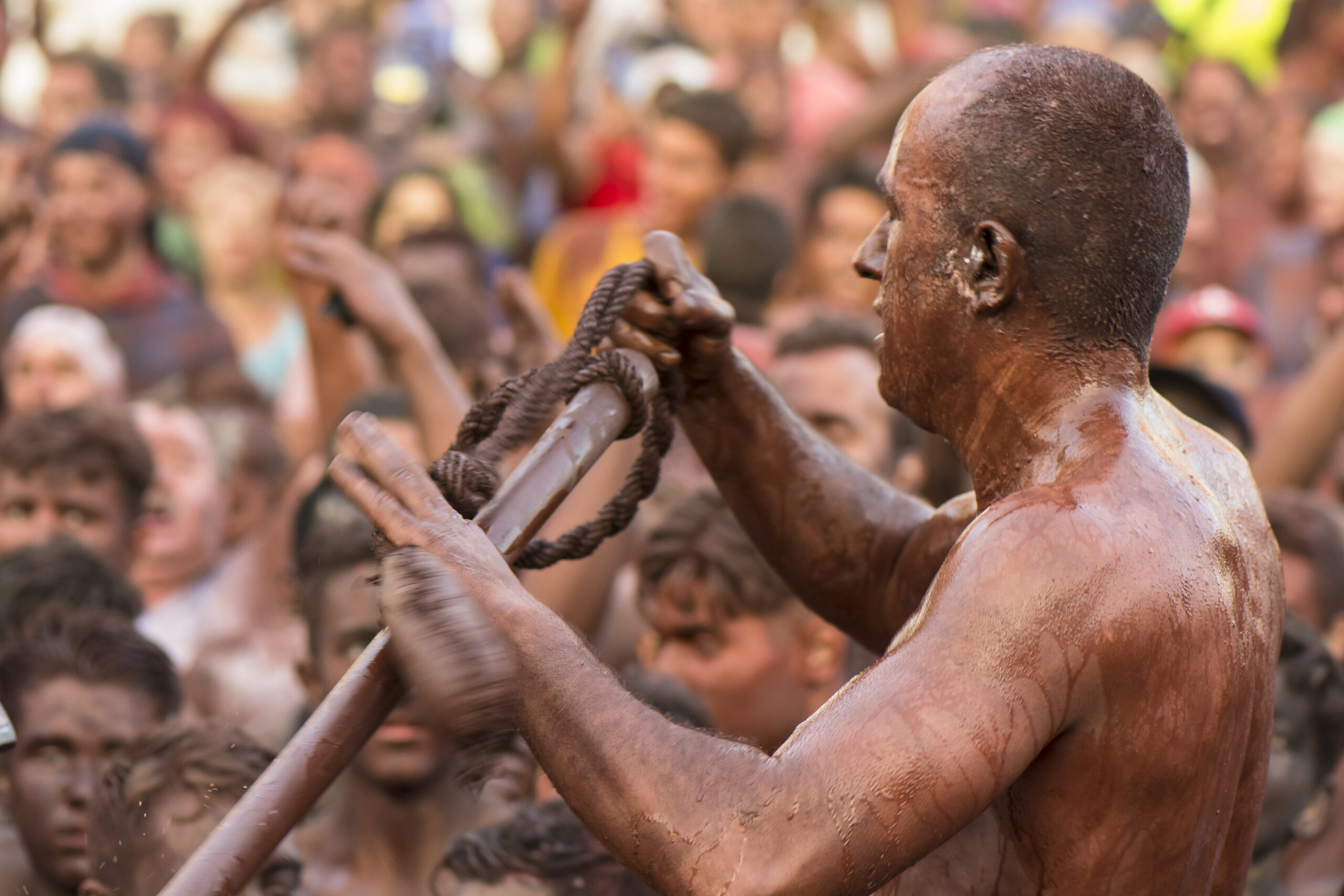
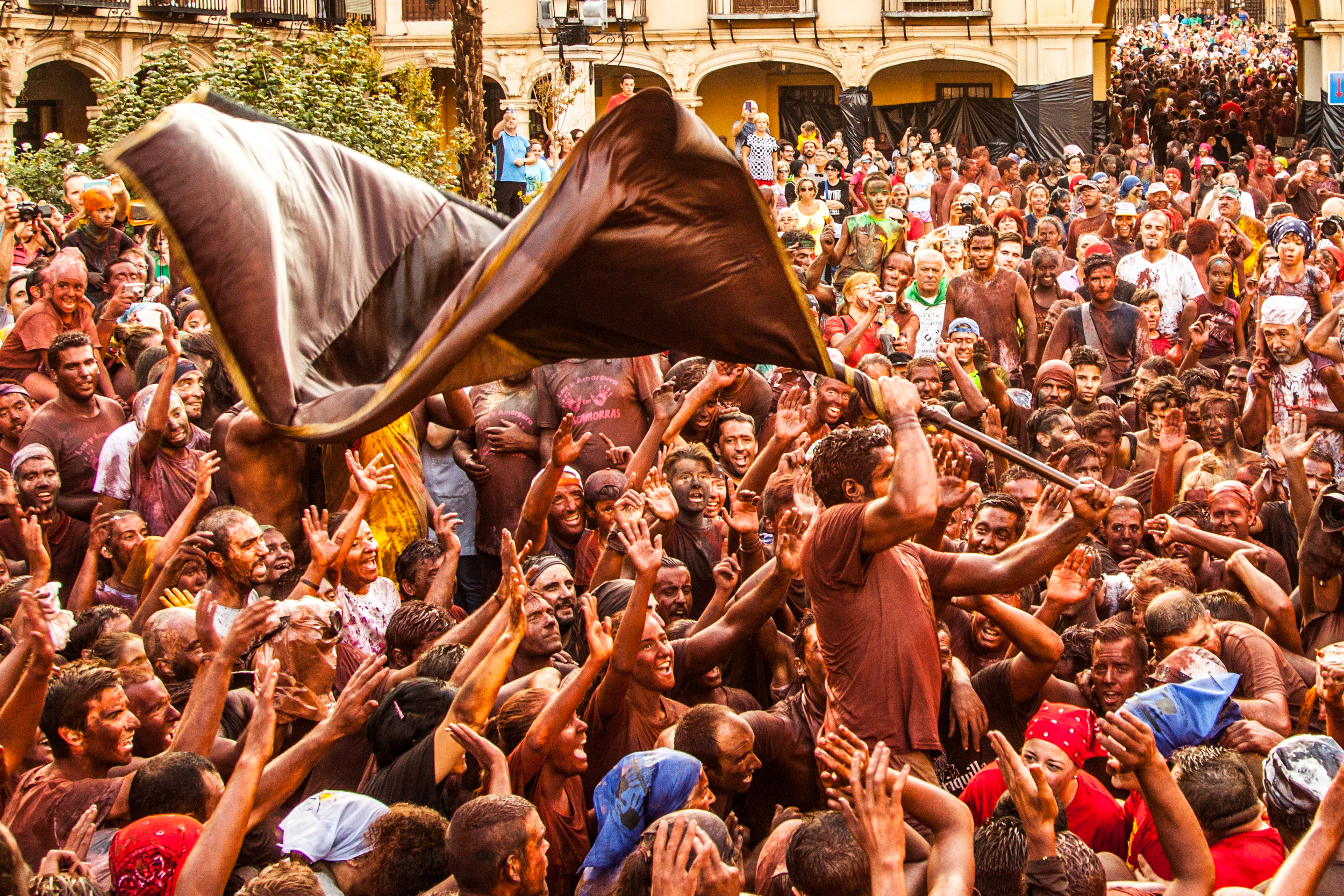
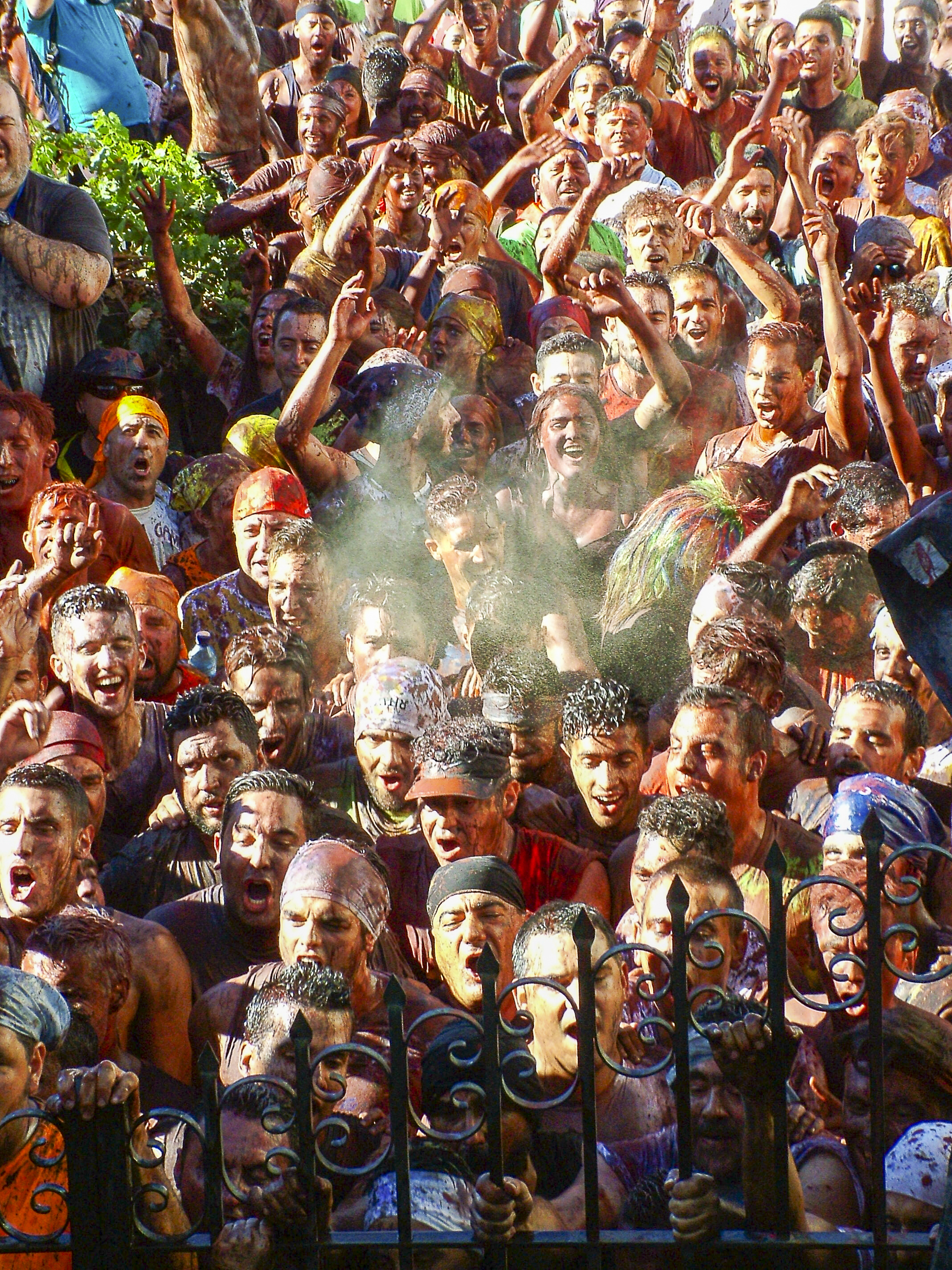
With the firing of a rocket and the roll of a drum, this traditional "Cascamorras" festival begins, which dates back to the mid-15th century.
After the Reconquista, a worker from Guadix named Juan Pedernal was demolishing a wall in the ruins of an old Mozarabic mosque, where the convent and church of La Merced now stand in the city of Baza. Juan Pedernal discovered the image, hidden since the 12th century to prevent its desecration. Apparently, the Virgin uttered the phrase, "Baza-Guadix, have mercy on me!" upon the unexpected appearance of the mason's pickaxe, suffering no harm whatsoever, thus giving rise to her current name, Our Lady of Mercy. The statue still bears the mark of the blow on her cheeks.
Juan Pedernal believed the statue should belong to the city of Guadix since he was the one who found it, but the people of Baza claimed it as their own because it had been found in Baza. After disputes and lawsuits between the two cities, a tacit agreement was reached that if a commissioner from the city of Guadix managed to enter Baza and reach the Church of La Merced unpainted and completely clean, he could recover the Virgin of Guadix.
The Cascamorras, a pseudo-religious figure dressed in a multicolored costume resembling that of a harlequin, leaves Guadix on September 5th at midnight, heading towards Baza, with the purpose of recovering the image of the Virgin of Piety. To recover it, the Cascamorras must arrive without a single stain on his costume, and naturally, the people of Baza will not allow the image of their patron saint to leave the city. After the ensuing popular scuffle and religious celebrations, the Cascamorras returns to Guadix on September 9th, where he is received with the same ceremony as upon his departure, all the way to the parish church of San Miguel.
Thus, in Baza it is celebrated on September 6th, and in Guadix on September 9th.
It is a very popular, fun and tremendously dynamic festival, full of color, with great participation from the young-at-heart population.