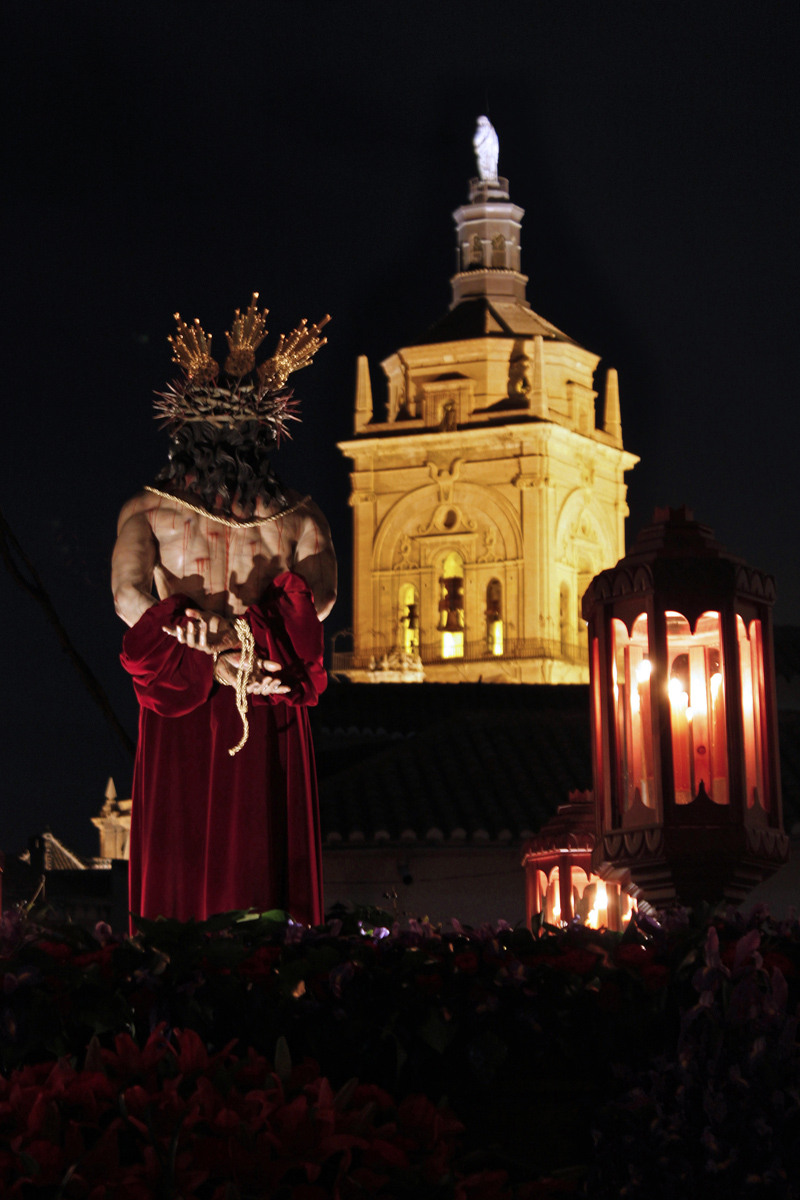
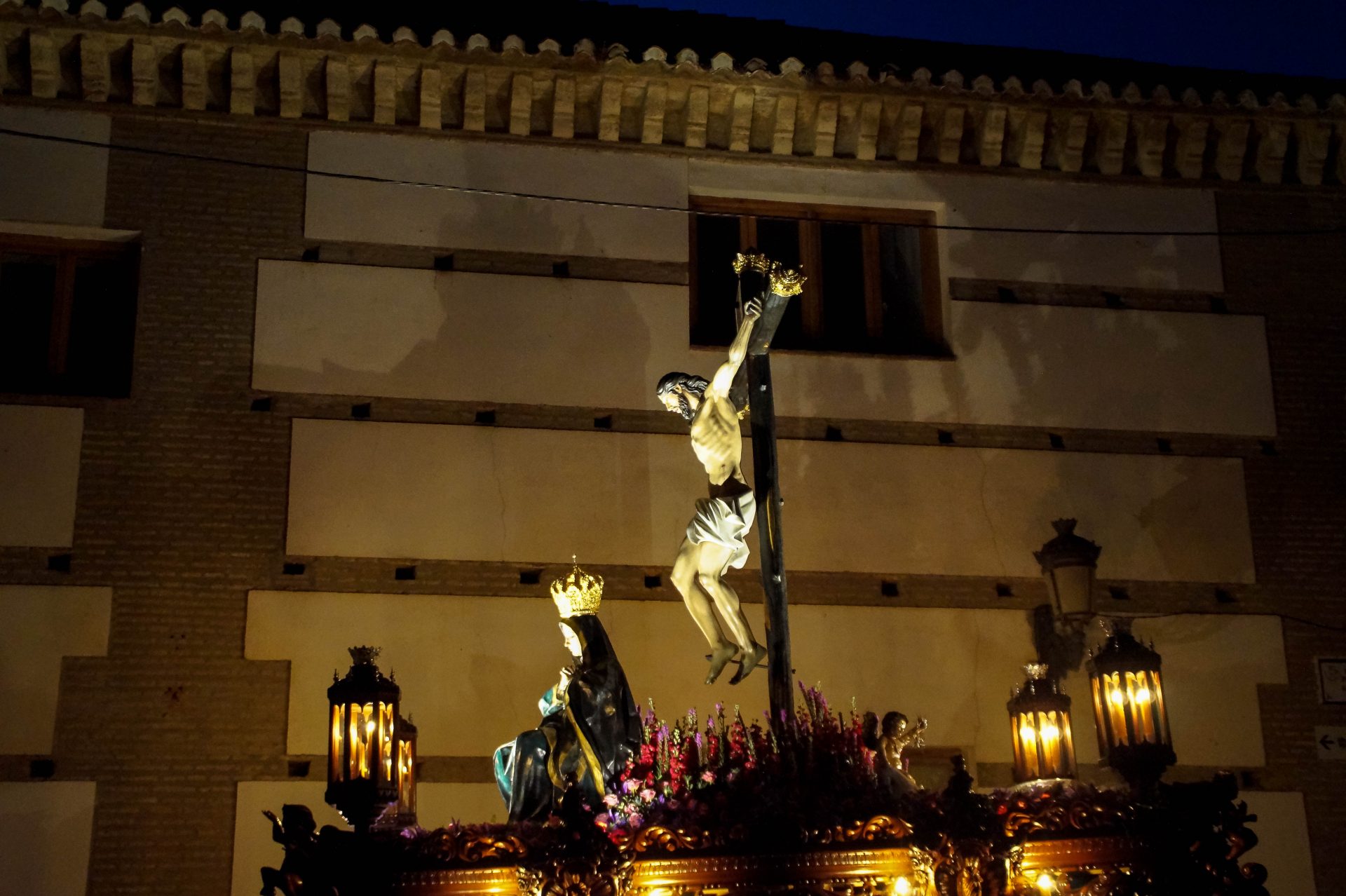
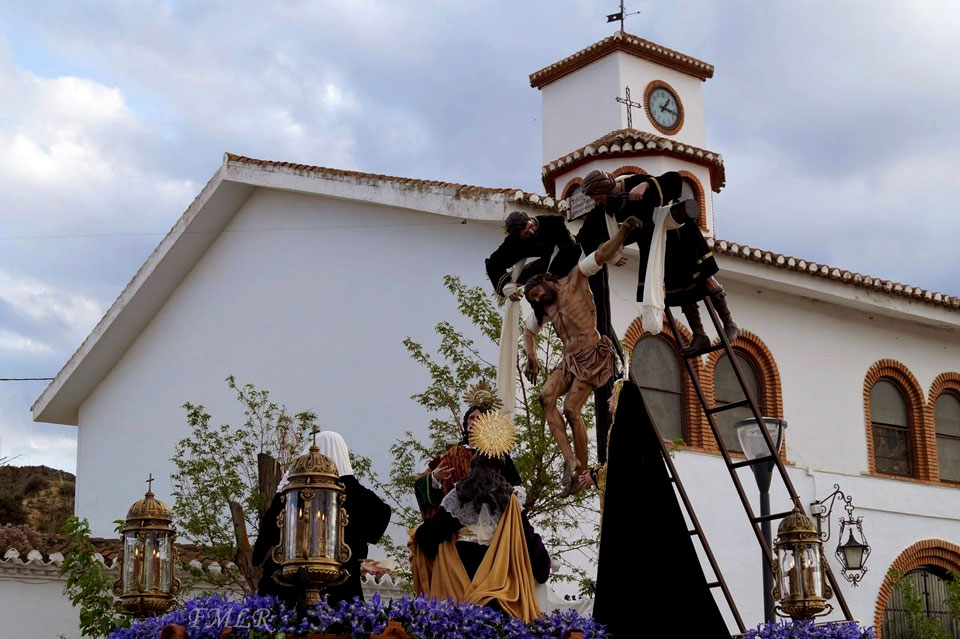
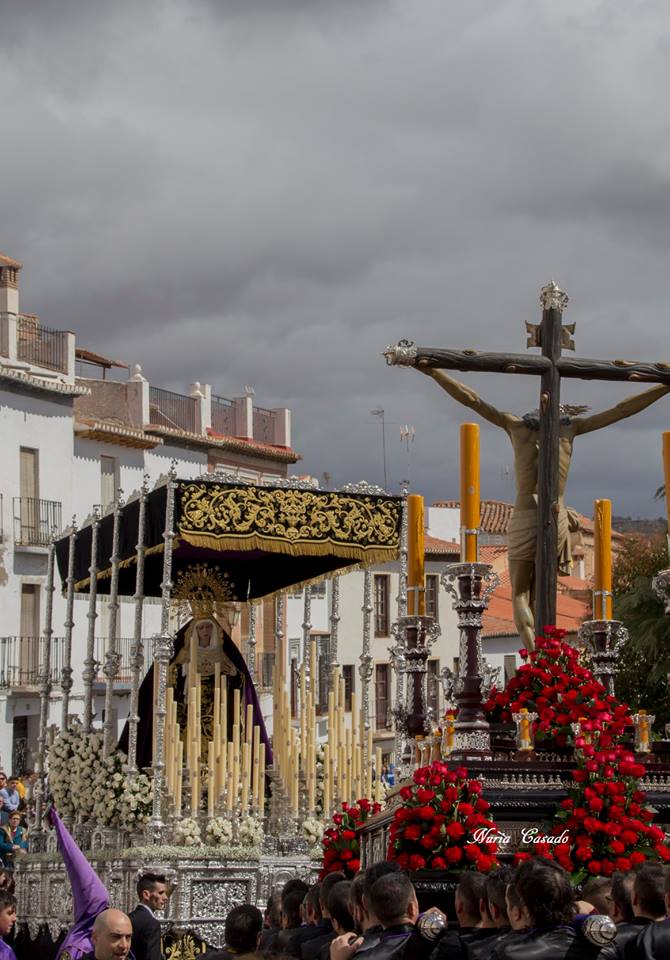
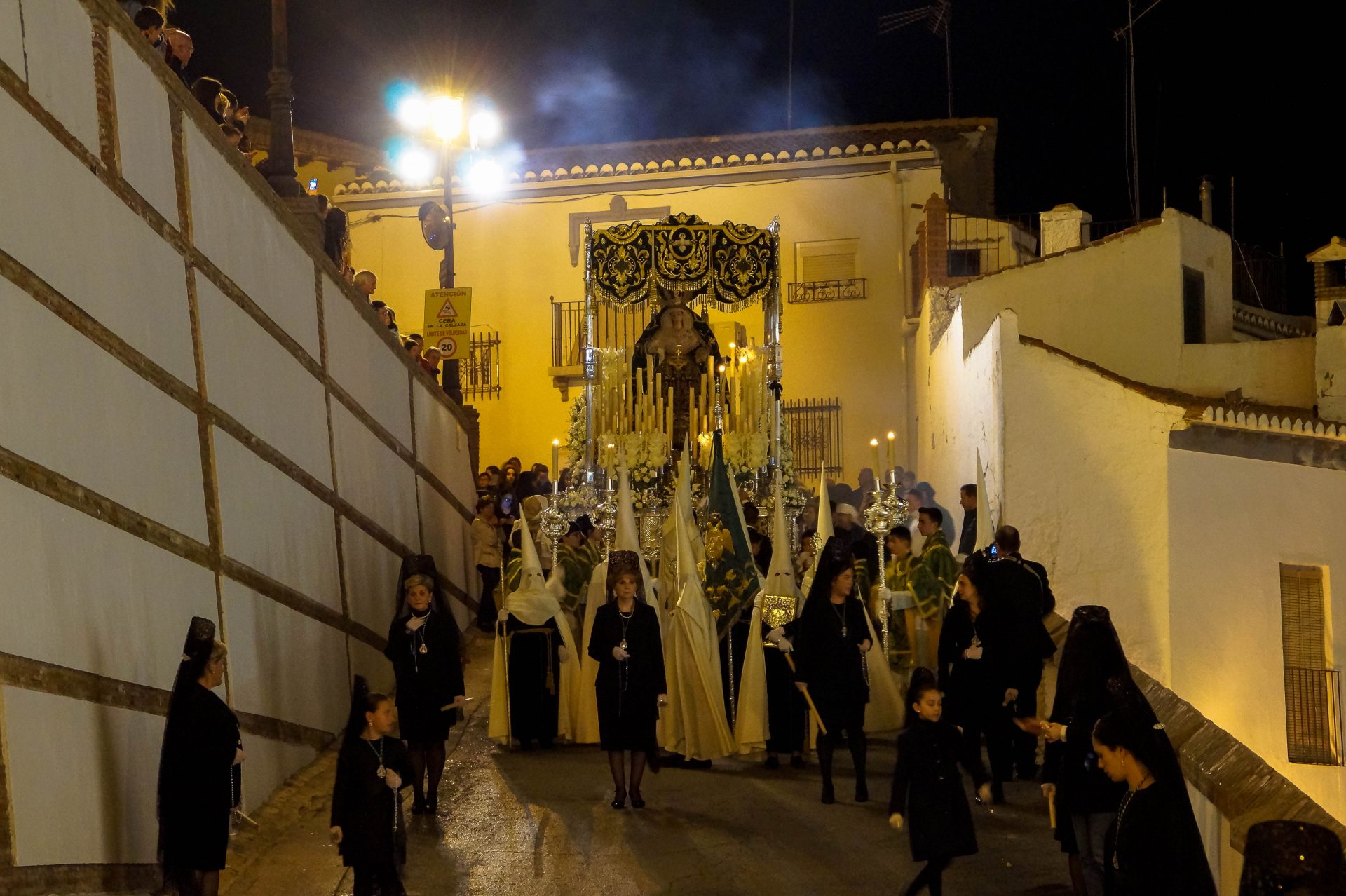
Holy Week in Guadix, centuries old and very moving due to its great citizen participation and the contrasts in the processional parades through the historic center and the caves, where tradition merges with faith.
Its origin dates back to the 16th and 17th centuries when, after the capture of the city by the Catholic Monarchs, a new religious order was established that would favor the emergence of Holy Week: the images were the vehicle to teach the life of Christ, Mary and the Saints to the society, mostly illiterate, grouping around a devotional image forming a brotherhood or an association in relation to it.
In the 18th century, Holy Week in Guadix already appeared configured as such, with the brotherhood centers being Santo Domingo, San Francisco, Santiago and San Sebastián.
The 19th century was a time of ups and downs as political events followed one another, and at the beginning of the 20th century it entered a crisis, from which it did not fully recover until the 1980s.
Thousands of people, organized into fifteen brotherhoods, care for and enhance a first-rate historical and artistic heritage and constitute the largest civic movement in the city. They are self-governing and participatory entities, overseen by the parishes but with recognized legal autonomy and stable financial independence.
These sixteen entities have united in the so-called "Federation of Brotherhoods" since 1953. This body is responsible for regulating all the processions of Holy Week in Guadix. It streamlines procedures and agreements with official institutions and controls the procession times along the official route, respecting the internal workings of each brotherhood.
Today, Holy Week in Guadix is one of the most important and popular in the region.
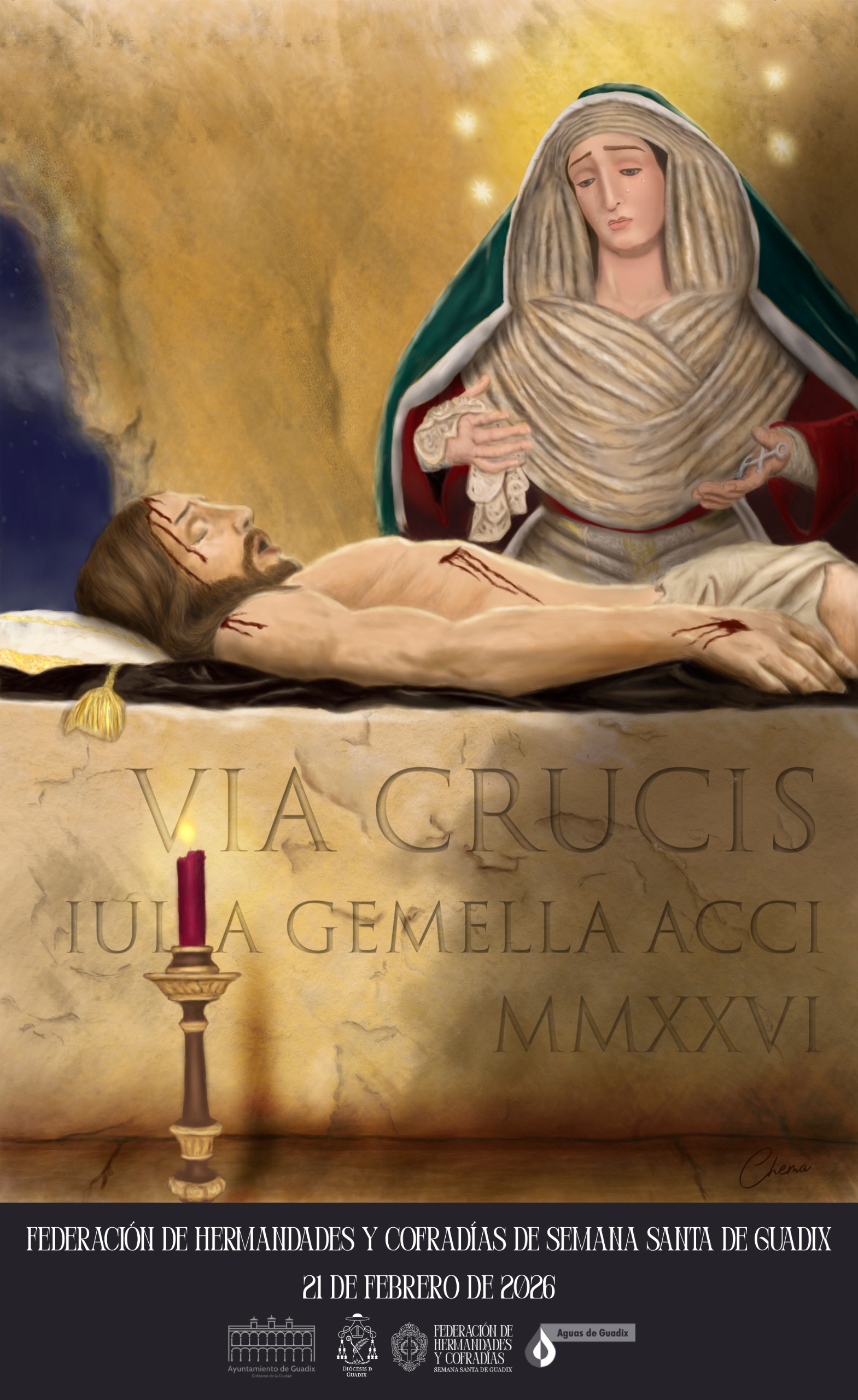
This week commemorates the Passion of Christ and is composed of two parts: the end of Lent, from Palm Sunday to Holy Wednesday, and the Easter Triduum (Holy Thursday, Good Friday, Holy Saturday, and Easter Sunday). During these days, the people of Guadix enjoy the processions, filled with emotion and devotion, carried out by its sixteen brotherhoods, which, as confraternities, take to the streets and squares from Palm Sunday to Easter Sunday: Borriquilla, Estrella, Dolores, Flagelación, Esperanza, Via Crucis, Nazareno, Lágrimas, Obediencia, Luz, San Juan, Descendimiento, Sepulcro, Soledad y Resucitado, Rosario, along with the pro-brotherhoods of Servitas and Cautivo.
Its imagery and floats are of high quality, many of them made during the 18th and 19th centuries.
Almost all the processions are accompanied by music, whether in the form of a quartet or chapel music, a musical group, a bugle and drum band, or a brass band. Although some others, it is true, process in silence.
Guadix becomes a benchmark for Holy Week in Andalusia these days.